How Do You Design Landscaping That Looks Good Year-Round?
Year-round landscaping is not about keeping every plant in bloom. It is about giving the property something attractive to offer in every season.
The strongest four-season landscapes combine permanent structure with carefully timed change. Evergreen plants, trees, stonework, paths, walls, and the shape of planting beds create a dependable framework. Flowers, foliage color, ornamental grasses, berries, and bark add seasonal interest within that framework.
North Georgia properties experience hot summers, cool winters, periods of heavy rain, and major differences in elevation, sun, and soil. Plant selection must respond to those conditions if the landscape is expected to remain healthy and appealing.
Tri-State Landscapes designs complete outdoor environments that balance year-round appearance, seasonal variety, maintenance needs, and the natural character of mountain properties.
Layer Plants for Height, Texture, and Depth
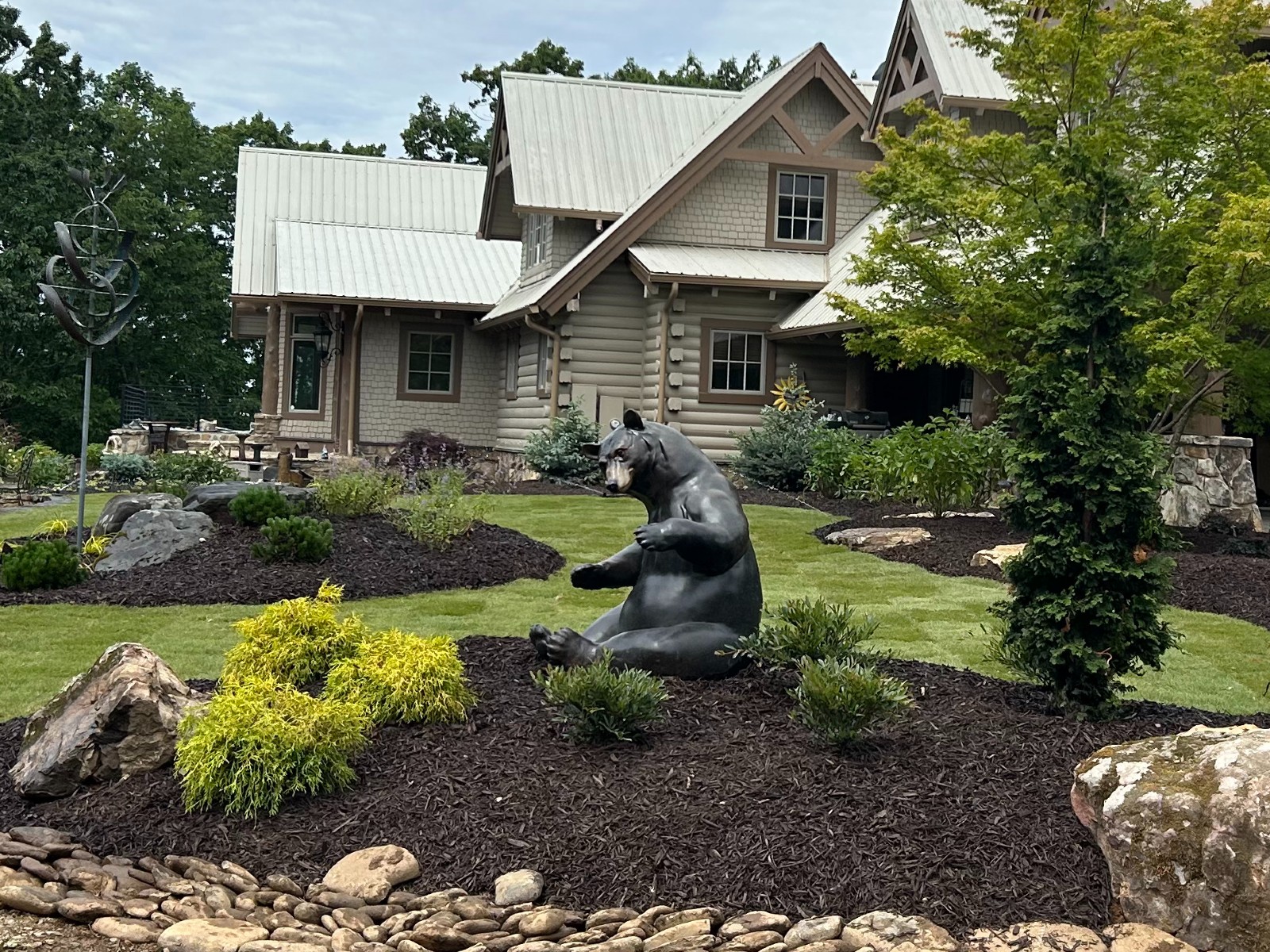
Planting in layers makes a landscape look full without becoming crowded. Taller trees form the upper canopy, understory trees create a middle layer, shrubs establish mass, and perennials or ground covers soften the front of the bed.
Texture matters as much as flower color. Fine grasses, broad evergreen leaves, needled foliage, smooth bark, and rough stone create contrast that remains noticeable for longer than a short bloom period.
The layers should be planned for mature size. Proper spacing prevents the landscape from becoming overgrown and allows each plant to keep its natural form.
Plan a Sequence of Seasonal Interest
A four-season planting plan considers what the yard will look like month by month. Spring may be carried by flowering trees, bulbs, and fresh foliage. Summer can rely on durable perennials, flowering shrubs, and strong leaf texture. Fall brings changing foliage, seed heads, grasses, and berries. Winter interest may come from evergreens, bark, branching, stone, and persistent fruit.
The goal is not to fill every bed with every season. It is to distribute seasonal highlights so important views—such as the front entry, patio, driveway approach, and main windows—retain interest throughout the year.
Use Hardscapes to Carry the Design All Year
Hardscapes remain visible in every season and can give a landscape much of its identity. Natural stone is especially effective around North Georgia mountain homes because it complements wooded settings and exposed rock.
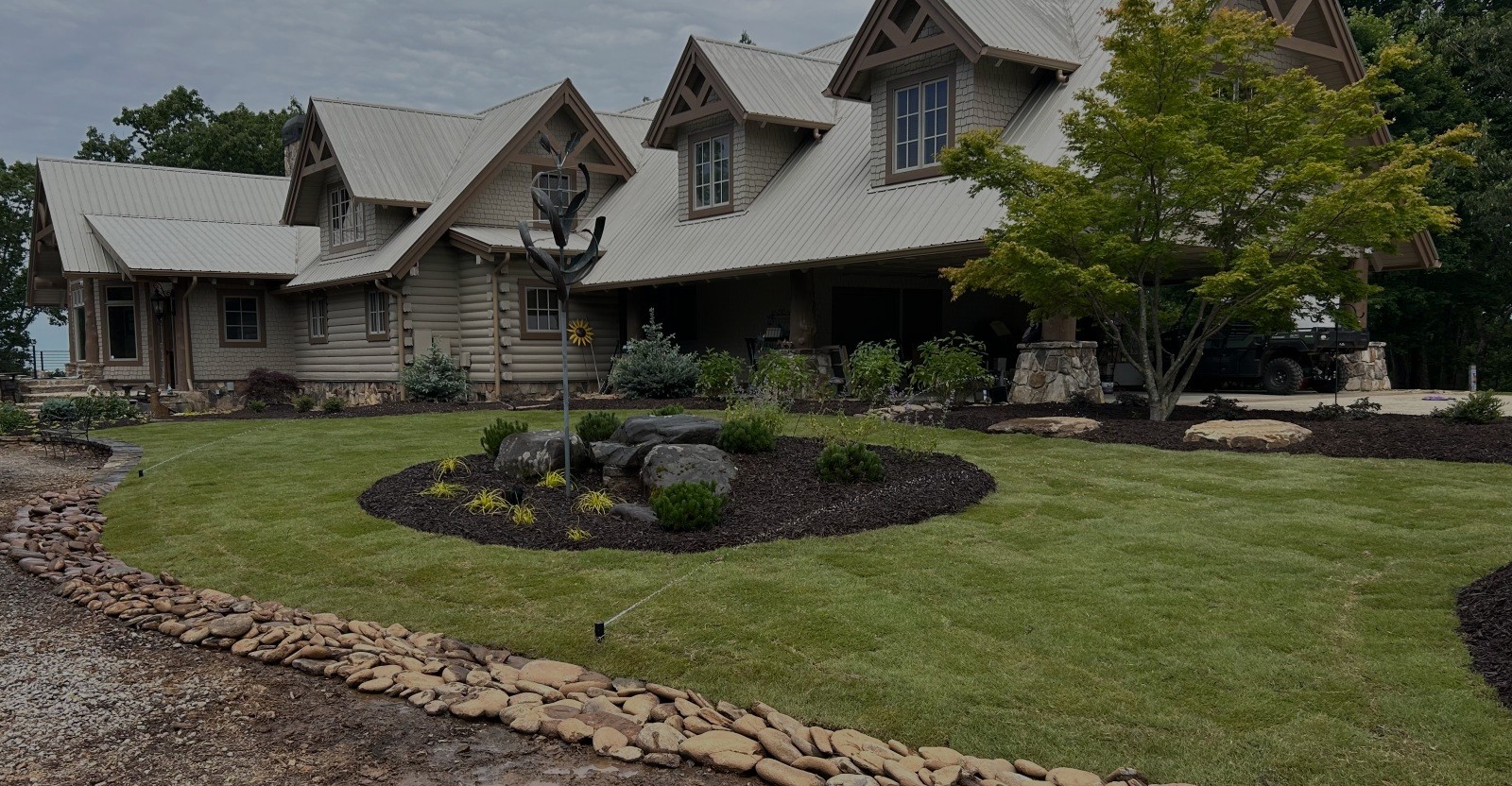
A walkway can establish a strong line through a garden. A retaining wall can create level planting areas and visual depth. A patio, fire feature, or seat wall can become a focal point even when nearby plants are dormant.
Materials should be repeated with restraint. Using a consistent stone or color family across steps, walls, edging, and patios helps the property feel coordinated rather than pieced together.
Design for Maintenance as Well as Appearance
A year-round landscape only succeeds when its maintenance needs match the homeowner's expectations. Large numbers of plants that require frequent pruning, dividing, watering, or cleanup can make an otherwise beautiful design difficult to sustain.
A practical plan uses durable plants in larger groups, limits high-maintenance varieties to visible areas, provides access for care, and accounts for leaf drop from surrounding trees. Irrigation needs, mulch, pruning cycles, and deer pressure should be discussed before the plant palette is finalized.
This approach allows the landscape to mature gracefully instead of depending on constant correction.
Serving North Georgia Mountain Communities
Tri-State Landscapes provides landscape design services for homeowners who want a property that looks intentional, functions comfortably, and responds to North Georgia terrain.
Our service areas include:
- Blue Ridge
- Blairsville
- Ellijay
- Hiawassee
- Jasper
- Talking Rock
- McCaysville
- Surrounding North Georgia mountain communities
Our experience with mountain properties helps us coordinate slopes, drainage, access, planting, hardscapes, and outdoor features as parts of one complete landscape.
Frequently Asked Questions
- What makes a landscape look good in winter?
Evergreen plants, attractive branching, bark, berries, ornamental grasses, stonework, defined bed lines, and well-placed focal points give a landscape structure when flowers and deciduous foliage are absent. - How many evergreen plants should a landscape have?
There is no single correct percentage. The right amount depends on the property, views, screening needs, architecture, and desired winter appearance. Evergreens should provide structure without making the design feel heavy. - Can native plants provide year-round interest?
Yes. Native and regionally adapted trees, shrubs, grasses, and perennials can provide flowers, foliage color, berries, seed heads, bark, and evergreen structure across different seasons. - How do you keep a four-season landscape from looking crowded?
Use a clear framework, group plants instead of collecting many unrelated varieties, respect mature sizes, repeat selected materials, and leave intentional open space. - Do you design year-round landscapes in Blue Ridge and North Georgia?
Yes. Tri-State Landscapes designs complete landscapes for Blue Ridge, Blairsville, Ellijay, Hiawassee, Jasper, Talking Rock, McCaysville, and nearby mountain communities.